
CurriculumGeography
Geography at Brinscall St John's
Curious, confident geographers who care for God’s world
At Brinscall St John’s, we want Geography to inspire children to be curious about the world around them – from the village and landscape on our doorstep to countries, communities and environments across the globe.
Our Geography curriculum gives children the knowledge, vocabulary and geographical skills they need to understand places, people, environments and the connections between them.
Through exciting topics, practical fieldwork, maps, enquiry and opportunities to explore their local environment, our children learn that Geography is not simply about knowing where places are. It is about asking questions, investigating patterns, understanding change and thinking carefully about our responsibility towards the world in which we live.
Our school vision, “Shine with the light of Jesus,” runs through our Geography curriculum.
Children are encouraged to show Kindness, Respect, Resilience, Courage, Friendship and Forgiveness as they learn about different people, communities and environments, developing a growing sense of responsibility for God’s world.
Why Geography Matters at Brinscall St John's
-
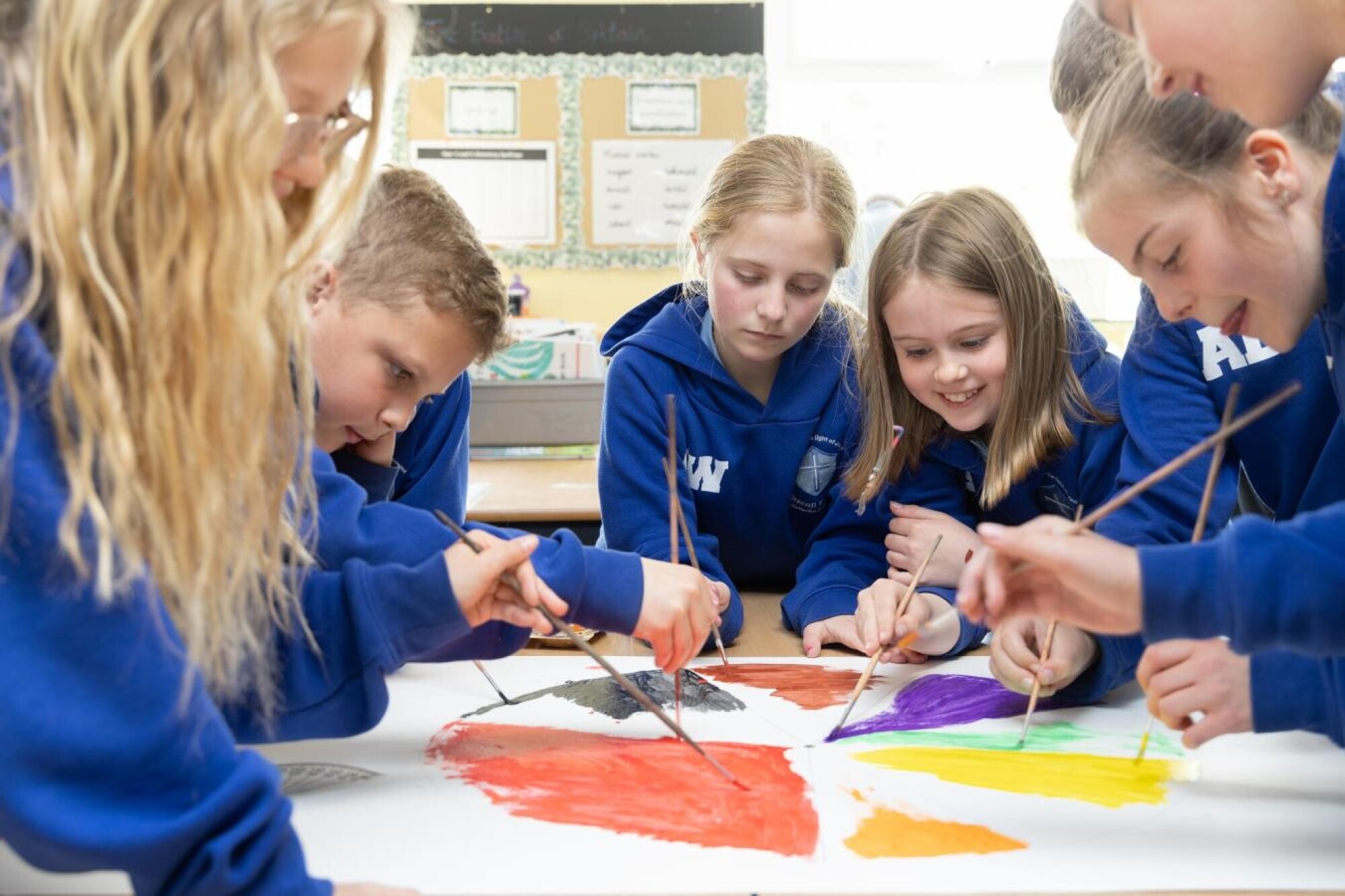
Geography helps our children make sense of the world they belong to.
We want our pupils to look at their surroundings and wonder:
Where is this place?
What is it like?
Why is it like this?
How has it changed?
How are people and places connected?
What can we do to look after it?From exploring our own local area to discovering contrasting locations around the world, children develop an understanding that they are part of a much bigger, wonderfully diverse world.
We aim to develop children who are not simply able to recall geographical facts, but who can think and behave like geographers.
Our Geography Curriculum
-
Our Geography curriculum is carefully sequenced from EYFS through to Year 6 so that knowledge and skills build progressively over time.
Children develop their understanding of:
🌎 Locational knowledge – knowing where places are and developing an increasingly secure mental map of the world.
🏘️ Place knowledge – exploring what different places are like and comparing locations, communities and environments.
🌦️ Human and physical geography – understanding natural processes and how people interact with and influence the environment.
🗺️ Geographical skills – using maps, atlases, globes, compass directions, data and geographical vocabulary.
🥾 Fieldwork and enquiry – observing, questioning, collecting information, recording findings and drawing conclusions from first-hand experiences.
As children move through school, they revisit and build upon previous learning so that their geographical knowledge becomes increasingly rich, connected and secure.
Explore our Geography curriculum map here:
Geography Begins in Reception
-
Our youngest children are already geographers!
In Reception, children begin developing their understanding of people, places and the natural world through purposeful play, stories, discussion, continuous provision and first-hand experiences.
Children explore ideas such as place, near, far, maps and seasons, observe changes in the environment and take part in local walks and simple fieldwork.
These early experiences provide strong foundations for the map work, locality studies, enquiry and fieldwork children encounter as they move into Key Stage 1 and beyond.
View Geography within our Reception curriculum map here: Early Years Curriculum Page
Geography Beyond the Classroom
-
Some of the most memorable Geography learning happens when children can step outside and investigate the world for themselves.
Our local area provides a fantastic geographical classroom.
Wherever possible, children have opportunities to undertake fieldwork, make observations, collect information and investigate geographical questions first-hand.
This might include exploring the village and surrounding landscape, studying land use, observing physical features, collecting and presenting data or considering how an area has changed.
Fieldwork helps children understand that Geography is something they can see, touch, investigate and experience – not simply something found in a textbook.
Learning to think like a Geographer
-
Throughout their time at St John’s, children become increasingly confident in using the tools and techniques that geographers use.
They learn how to:
-
ask geographical questions
-
use maps, atlases and globes
-
develop their understanding of direction, scale and location
-
observe and record geographical features
-
collect and interpret information
-
use increasingly precise geographical vocabulary
-
identify patterns and connections
-
compare places and environments
-
use evidence to explain their thinking
-
draw conclusions from geographical enquiries.
Children are encouraged to explain not only what they notice, but why they think something has happened and what this might mean.
-
Caring for God's World
-
Geography provides wonderful opportunities for our children to think about stewardship, responsibility and respect.
As children learn about environments, climate, resources, communities and the relationship between people and the natural world, we encourage them to consider the choices we make and the impact those choices can have.
We want children to understand that caring for our planet begins with noticing, questioning and valuing the world around us.
Through Geography, children learn that they can make a difference – in their classroom, their school, their local community and, ultimately, the wider world.
Geography for Every Child
-
We believe that every child should be able to experience success in Geography.
Learning is carefully adapted so that pupils with SEND and those who may need additional support can access the same ambitious geographical learning as their peers.
This may include pre-teaching important vocabulary, visual prompts, carefully structured tasks, additional adult support, adapted recording methods and adjustments to fieldwork activities.
Our focus remains on the important geographical learning while removing barriers that might prevent a child from accessing it.
How do we know children are learning?
Assessment in Geography is part of the learning journey.
Teachers regularly check children's understanding through discussion, questioning, retrieval activities, quizzes, practical tasks, fieldwork and the work children produce.
We are particularly interested in whether children can remember, connect and apply their learning.
Our subject leader also considers children's books, fieldwork, pupil voice and the development of geographical and map skills across school to build a picture of how well our children are progressing.